
-
About UsProductsCustomized SolutionProjectGalleryNews
News
Best Architectural Woven Interiors Fabric for Construction Use in the Middle East
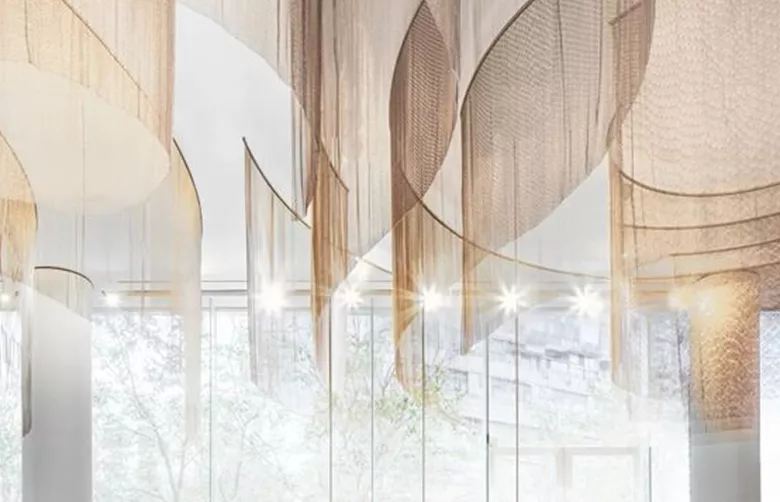
Release time: December 25, 2025The Middle East has become one of the world’s most influential regions for luxury construction, commercial real estate, and landmark architecture. From Dubai and Abu Dhabi to Riyadh and Doha, modern buildings increasingly use architectural woven metal fabrics to create striking interior spaces that combine beauty, performance, and durability.
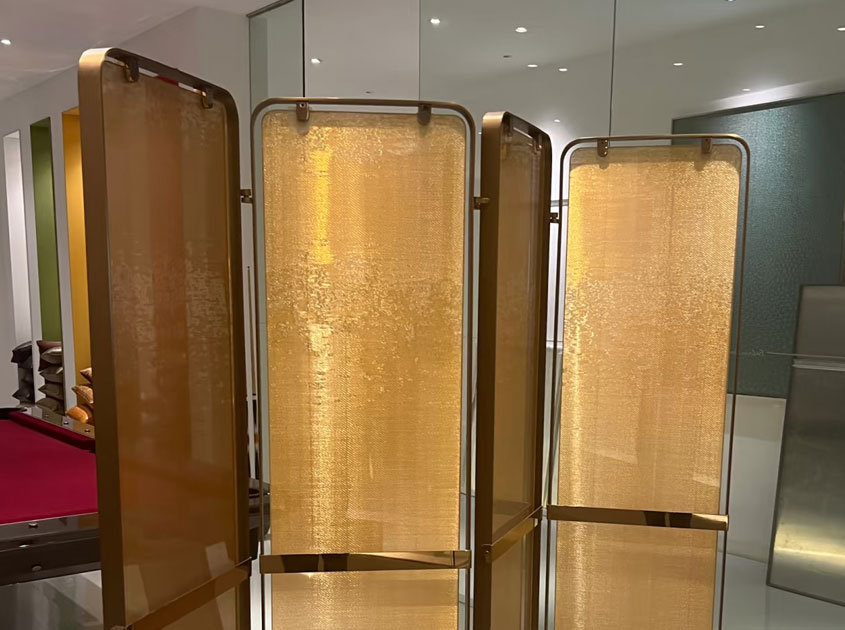
This article explains which woven interiors fabrics are best suited for construction projects in the Middle East and why this material has become essential in modern Middle Eastern architecture.
Why the Middle East Prefers Woven Metal Interiors
Middle Eastern buildings face extreme climate conditions, including:
High temperatures
Intense UV radiation
Dust and sand
High humidity in coastal cities
Traditional interior materials such as wood, fabric, or plastic degrade quickly. Architectural woven metal fabric offers:
Fire resistance
Excellent ventilation
Long service life
Elegant appearance
Low maintenance
This makes it ideal for airports, hotels, malls, mosques, offices, and luxury residences.
Best Materials for Middle East Interior Mesh
1. Stainless Steel Woven Fabric (304 / 316)
Stainless steel is the top choice for high-end projects.
Benefits:
Outstanding corrosion resistance
Withstands humidity and air conditioning environments
Modern, clean metallic appearance
Easy to clean
Grade 316 is especially suitable for coastal cities like Dubai and Jeddah.
2. Aluminum Woven Metal Fabric
Aluminum offers:
Lightweight construction
Excellent resistance to corrosion
Easy installation for ceilings and partitions
Lower cost than stainless steel
It is widely used in large commercial interiors.
3. Brass & Bronze Decorative Woven Mesh
For luxury projects, brass or bronze woven fabric is popular for:
Hotel lobbies
High-end retail stores
VIP lounges
Mosques and cultural buildings
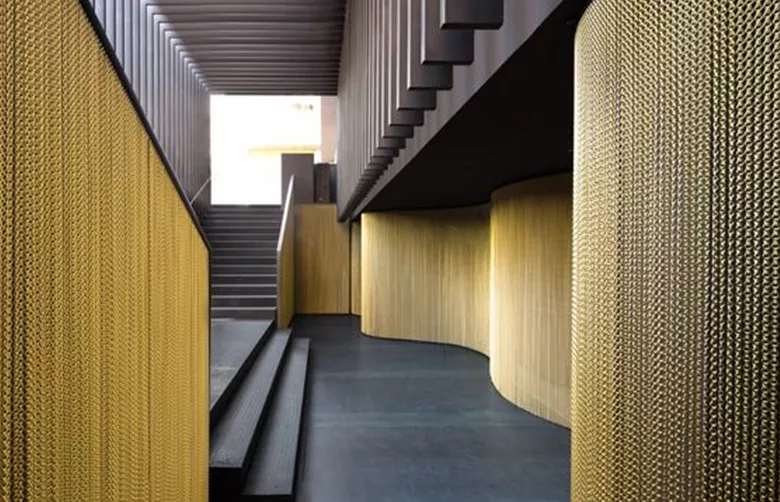
These metals provide warm golden tones that align with Middle Eastern design preferences.
Most Popular Applications in the Middle East
Architectural woven interiors fabric is widely used in:
Decorative wall cladding
Suspended ceilings
Room partitions
Elevator and stair enclosures
Hotel and mall décor
Ventilation screens
The open structure allows airflow, light control, and thermal management, essential for Middle East buildings.
Importance of Fire and Safety Compliance
Middle Eastern construction standards require:
Non-combustible materials
Fire-rated interior finishes
Structural stability
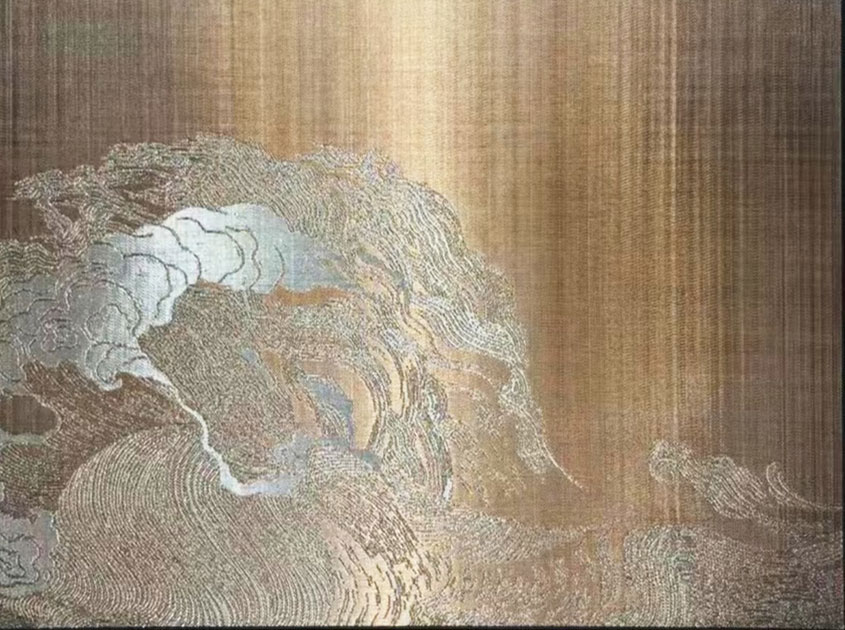
Metal woven fabric naturally meets these requirements, making it safer than textile or plastic materials.
Why Custom Design Is Critical
Middle East architects demand:
Custom weaving patterns
Specific light transmission levels
Custom colors (gold, champagne, black, bronze)
Exact panel dimensions
OEM production allows:
PVD coating
Powder coating
Anodizing
Patterned weaving
Chinese manufacturers with advanced weaving and coating technology provide this level of customization at competitive cost.
Why the Middle East Sources from China
Middle East developers increasingly source woven interiors fabric from China because:
China offers large-scale production
Advanced metal weaving technology
Competitive pricing
Shorter lead times
International project experience
Chinese architectural mesh now meets European and Middle Eastern quality standards, making it a preferred supply base.
Conclusion
The best architectural woven interiors fabric for construction use in the Middle East includes:
Stainless steel woven mesh
Aluminum woven metal fabric
Brass and bronze decorative mesh
Custom-colored and patterned OEM designs
These materials provide heat resistance, durability, fire safety, and luxury aesthetics—exactly what Middle Eastern projects require.
By partnering with a professional Chinese woven mesh manufacturer, Middle East developers and contractors gain access to high-quality, customizable, and cost-effective architectural metal fabrics.
Recommended News