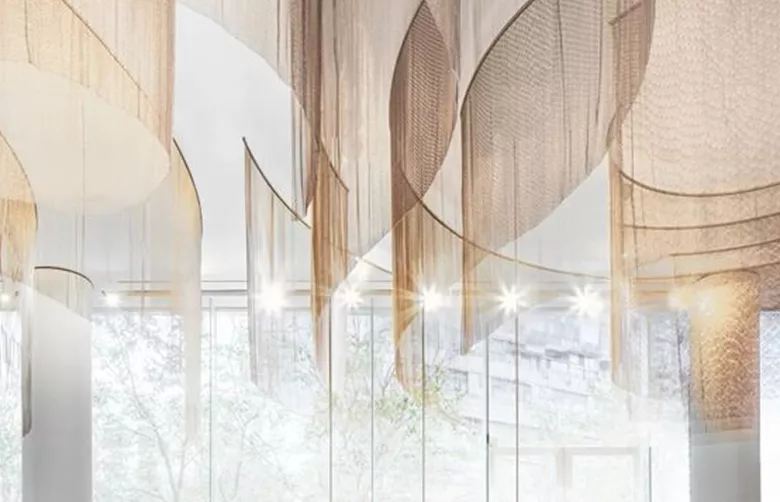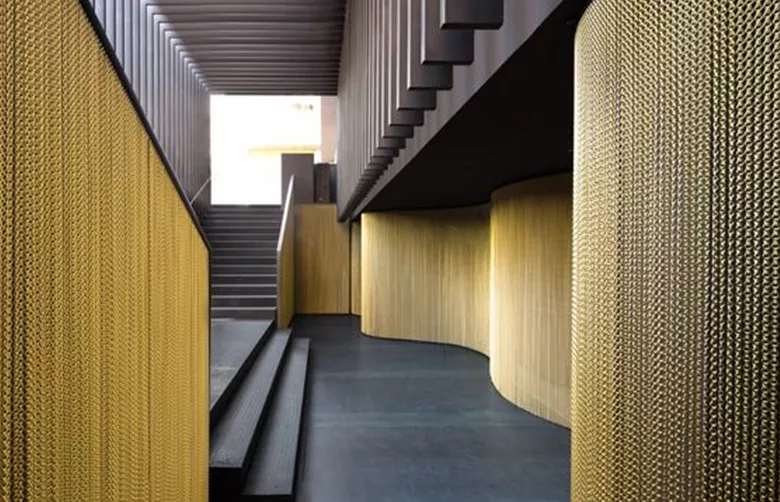

-
About UsProductsCustomized SolutionProjectGalleryNews
News
Woven Metal Fabric vs Traditional Decorative Materials: Which Is Better for Interior Design?
Release time: August 28, 2026Interior designers have more material choices than ever when creating decorative walls, room dividers, ceilings, entrances, and feature installations.
Traditional decorative materials such as fabric, wood, glass, solid metal panels, and decorative boards remain widely used. At the same time, woven metal fabric has become an increasingly interesting option for modern architectural and interior design projects.
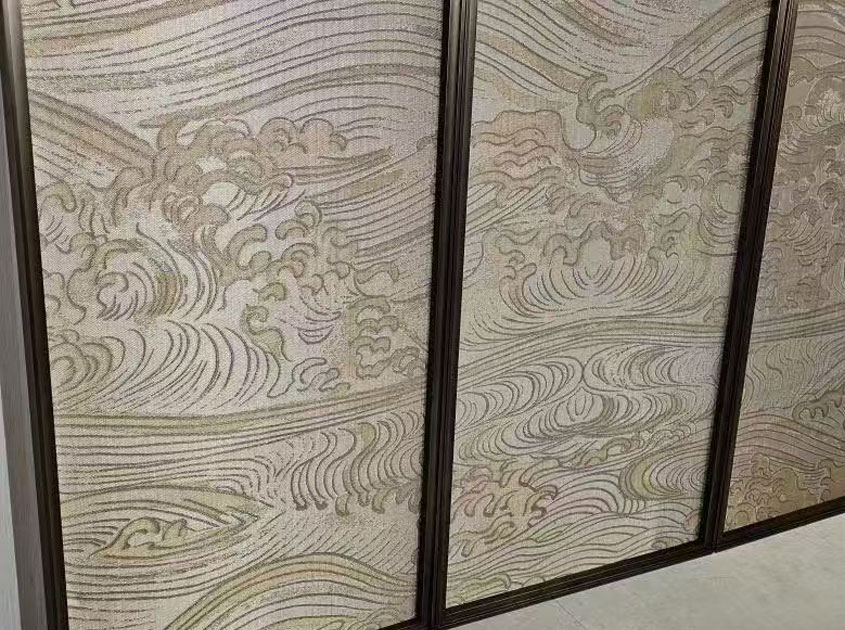
Woven metal fabric is made by weaving metal wires into flexible mesh structures. Depending on the weave pattern, wire diameter, material, and opening size, it can create anything from a relatively open decorative surface to a denser visual screen.
So, how does woven metal fabric compare with traditional decorative materials?
There is no universal winner.
The better material depends on the project's requirements for appearance, transparency, flexibility, durability, airflow, maintenance, fire performance, installation, and budget.
This guide compares woven metal fabric with several common decorative materials and explains where each option works best.
What Is Woven Metal Fabric?
Woven metal fabric is a flexible architectural mesh manufactured by weaving metal wires together.
Common materials include:
Stainless steel
Aluminum
Brass
Copper
Carbon steel
Different weaving methods can produce different patterns and levels of openness.
Common characteristics include:
Flexible structure
Metallic appearance
Adjustable transparency
Good airflow
High design flexibility
Customizable dimensions
Different surface finishes
It can be used as a decorative layer rather than a solid structural wall.
What Are Traditional Decorative Materials?
Traditional decorative materials cover a very broad range of products.
For comparison, this article focuses on several common materials:
Fabric curtains
Wood panels
Glass
Solid metal panels
Decorative boards
Each has its own advantages.
The important question is therefore not:
“Is woven metal fabric better than everything else?”
but:
“Which material provides the right combination of properties for this project?”
Woven Metal Fabric vs Fabric
Fabric curtains are widely used for:
Room dividers
Windows
Hotels
Restaurants
Residential interiors
Stage decoration
Woven metal fabric can perform some of the same functions, but the visual effect is very different.
Feature
Woven Metal Fabric
Traditional Fabric
Material Metal wire Textile
Appearance Metallic Soft
Flexibility High Very high
Airflow Excellent Depends on fabric
Transparency Adjustable Adjustable
Durability Generally high Material dependent
Fire performance Depends on metal/material Depends on textile
Cleaning Relatively easy Fabric dependent
Moisture resistance Generally good Material dependent
Architectural appearance Strong Soft
When Woven Metal Fabric Is Better
Choose woven metal fabric when you want:
A contemporary appearance
Metallic texture
Long-term durability
A more architectural visual effect
A semi-transparent partition
When Fabric Is Better
Traditional fabric may be preferable when you need:
Softness
Acoustic absorption
Traditional interior styling
Strong privacy
A warm residential atmosphere
Woven Metal Fabric vs Wood
Wood is one of the most established materials in interior design.
It is commonly used for:
Wall panels
Partitions
Ceilings
Doors
Furniture
Decorative screens
Wood creates a naturally warm atmosphere, while woven metal fabric creates a lighter and more contemporary appearance.
Feature
Woven Metal Fabric
Wood
Visual style Modern/industrial Natural/warm
Transparency High potential Usually low
Airflow Excellent Limited
Flexibility High Low
Moisture resistance Generally good Depends on treatment
Weight Material dependent Material dependent
Maintenance Relatively simple Requires finishing/maintenance
Shape customization High Moderate
Room divider Excellent Good
Curved applications Excellent More difficult
When Metal Fabric Is Better
It is particularly useful when designers want to:
Maintain visual continuity
Allow light through
Maintain airflow
Create a lightweight partition
Cover curved structures
When Wood Is Better
Wood remains a strong choice when the design requires:
Natural texture
Warm colors
Acoustic benefits
Solid visual separation
Woven Metal Fabric vs Glass
Glass provides excellent visibility and light transmission.
It is commonly used for:
Office partitions
Hotel interiors
Storefronts
Lobby areas
Meeting rooms
At first glance, glass and woven metal fabric may seem similar because both can maintain visual connections between spaces.
But they behave very differently.
Feature
Woven Metal Fabric
Glass
Transparency Adjustable High
Flexibility High Low
Impact resistance Material dependent Glass type dependent
Airflow Excellent None
Privacy Adjustable Limited unless treated
Weight Often lower Relatively high
Texture Metallic Smooth
Acoustic effect Material/system dependent Material/system dependent
Curved installation Easier More complex
Visual separation Partial Clear
Glass creates a clean, continuous surface.
Woven metal fabric creates a textured, layered surface.
This makes metal fabric particularly interesting when the designer wants something between an open curtain and a solid partition.
Woven Metal Fabric vs Solid Metal Panels
Solid metal panels provide a strong architectural appearance.
They can be used for:
Feature walls
Ceilings
Exterior facades
Columns
Decorative cladding
Woven metal fabric offers a different approach.
Instead of creating a solid barrier, it creates a permeable metal surface.
Feature
Woven Metal Fabric
Solid Metal Panel
Airflow Excellent Very low
Transparency Adjustable None
Flexibility High Low
Weight Material dependent Material dependent
Decorative texture High Moderate
Light transmission Adjustable None
Room divider Excellent Good
Feature wall Excellent Excellent
Curved surfaces Easier More difficult
Visual openness High Low
If the goal is to create a completely enclosed surface, a solid panel may be more appropriate.
If the goal is to create a decorative metal layer while maintaining openness, woven metal fabric has a significant advantage.
Woven Metal Fabric vs Decorative Boards
Decorative boards are widely used because they are relatively easy to manufacture and install.
They may be made from:
MDF
PVC
Composite materials
Wood products
Other engineered materials
They can imitate:
Wood
Stone
Metal
Decorative patterns
However, woven metal fabric provides genuine metallic construction and a three-dimensional woven texture.
It can also produce changing visual effects as people move around it or as lighting changes.
Why Is Woven Metal Fabric Becoming Popular?
One reason is that modern interior design increasingly values transparency and layered spaces.
Instead of dividing a building into completely separate rooms, designers often want spaces to remain visually connected.
Woven metal fabric can create this effect.
For example:
Lobby → Metal mesh → Restaurant
The spaces remain connected, but the mesh creates a visual transition.
This is difficult to achieve with a solid wall.
1. Transparency
Woven metal fabric can be manufactured with different opening sizes.
A more open weave provides greater visibility.
A denser weave provides greater visual separation.
This gives designers greater control over:
Visibility ↔ Privacy
without completely closing the space.
2. Light Transmission
Light can pass through the openings in the mesh.
Depending on the weave and surface finish, the material can create:
Shadows
Reflections
Layered lighting
Metallic highlights
Changing visual effects
This makes it particularly effective in spaces with architectural lighting.
3. Airflow
Unlike solid decorative panels, woven metal fabric allows air to pass through.
This can be useful for:
Large interiors
Restaurants
Commercial spaces
Ventilated partitions
Decorative ceiling applications
4. Flexible Installation
Woven metal fabric can be used in different orientations and configurations.
It can be installed as:
Vertical curtains
Room dividers
Wall coverings
Ceiling decorations
Decorative screens
Column coverings
It can also be adapted to certain curved surfaces.
5. Strong Metallic Appearance
Metal creates a visual language that is difficult to reproduce with conventional textile materials.
Depending on the material and finish, woven mesh can provide:
Silver appearance
Gold appearance
Bronze appearance
Copper appearance
Black appearance
The surface can change dramatically under different lighting conditions.
6. Long-Term Durability
Metal is generally more resistant to physical wear than many textile materials.
For high-traffic commercial interiors, this can be an important consideration.
However, actual service life depends on:
Metal type
Wire diameter
Surface treatment
Installation
Environmental conditions
Maintenance
Which Metal Is Best for Woven Metal Fabric?
There is no single best material.
Stainless Steel
A strong choice when durability and corrosion resistance are priorities.
Common applications include:
Hotels
Airports
Commercial interiors
Public buildings
Architectural projects
Aluminum
Useful when lightweight construction is important.
Advantages include:
Low weight
Corrosion resistance
Easy handling
Decorative finishes
It can be particularly useful for large hanging installations.
Brass
Brass provides a warm golden appearance.
It is often selected for:
Luxury interiors
Hotels
Restaurants
Decorative partitions
Copper
Copper offers a distinctive warm metallic color.
Over time, its appearance can change depending on the environment and surface treatment.
Woven Metal Fabric for Room Dividers
One of the most useful applications is space separation.
Unlike a permanent wall, a woven metal divider can maintain:
Airflow
Natural light
Visual connection
Flexibility
It can divide:
Dining Area / Bar
Lobby / Reception
Retail / Display
Office / Meeting Area
without making the space feel completely enclosed.
Woven Metal Fabric for Feature Walls
A feature wall made from woven metal fabric can become the visual focus of an interior.
It can be installed:
In front of a solid wall
As a suspended layer
Behind a reception desk
Behind a bar
Around a display area
Backlighting can further emphasize the woven texture.
Woven Metal Fabric for Ceilings
Metal mesh can also be suspended below ceilings.
This can create:
Layered ceiling effects
Decorative shadows
Visual depth
Concealed services
Architectural interest
For large commercial interiors, the supporting system should be carefully designed because the ceiling structure must carry the mesh and accessories.
Woven Metal Fabric for Hotel Interiors
Hotels often need materials that combine:
Durability + Appearance + Customization
Woven metal fabric can be used in:
Hotel lobbies
Restaurants
Bars
Corridors
Elevators
Reception areas
Event spaces
Gold, bronze, brass, and stainless steel finishes can create very different atmospheres.
Woven Metal Fabric for Retail Design
Retail designers can use metal mesh to create:
Display backgrounds
Product partitions
Store entrances
Brand features
Decorative walls
Customized patterns and finishes can help integrate the mesh with a company's visual identity.
Woven Metal Fabric for Restaurants
Restaurants can use woven metal mesh to separate areas while maintaining visual openness.
For example:
Dining area → Metal mesh divider → Private dining area
The material can provide separation without making the restaurant feel divided into small enclosed rooms.
Does Woven Metal Fabric Provide Privacy?
Yes, but privacy depends on the weave density and viewing angle.
A more open mesh provides greater visibility.
A denser mesh reduces visibility.
Lighting also has a major effect.
If the area behind the mesh is brightly illuminated, it may remain highly visible.
Therefore, designers should evaluate privacy under the actual lighting conditions of the project, not only by looking at a material sample.
Is Woven Metal Fabric Better for Acoustic Control?
Not automatically.
Woven metal fabric itself is primarily a decorative and architectural material rather than a dedicated acoustic absorber.
If acoustic performance is important, it can be combined with:
Acoustic fabric
Absorptive panels
Insulation
Perforated systems
Other acoustic materials
This creates a layered system that combines visual design with acoustic performance.
Is Woven Metal Fabric Easy to Maintain?
Generally, routine maintenance is straightforward.
Typical maintenance includes:
Dust removal
Gentle cleaning
Periodic inspection
Checking fixing points
Inspecting the supporting system
The required maintenance depends on:
Metal type
Finish
Indoor environment
Traffic level
Installation location
Which Material Is More Sustainable?
Sustainability should be evaluated across the entire product life cycle rather than based only on the material name.
Important factors include:
Material source
Recycled content
Manufacturing process
Product lifespan
Maintenance requirements
Recyclability
Transportation
Installation
End-of-life disposal
Metal has the advantage of being recyclable, while some traditional decorative materials may be difficult to recycle depending on their composition.
For a specific project, designers should request relevant material and environmental information from suppliers.
Cost Comparison
It is difficult to say that woven metal fabric is always cheaper or more expensive.
The total project cost depends on:
Metal type
Wire diameter
Mesh opening
Weave pattern
Surface finish
Mesh area
Supporting system
Installation
Transportation
A simple woven stainless steel mesh may have a very different cost from a customized brass decorative mesh.
Therefore, compare the complete installed system, rather than simply comparing material prices per square meter.
How to Choose Between Woven Metal Fabric and Traditional Materials?
A simple decision framework can help.
Choose Woven Metal Fabric When You Need:
Metallic appearance
Flexible partitions
Adjustable transparency
Airflow
Light transmission
Architectural texture
Custom patterns
Long-term durability
Curved or unusual applications
Choose Fabric When You Need:
Softness
Strong privacy
Textile texture
Acoustic absorption
Traditional decoration
Choose Wood When You Need:
Natural appearance
Warm atmosphere
Solid visual separation
Wood texture
Choose Glass When You Need:
Maximum visibility
Continuous transparency
A smooth surface
A clean minimalist appearance
Choose Solid Metal Panels When You Need:
Complete visual coverage
Strong metal appearance
Solid cladding
A rigid architectural surface
Decision Table
Project Requirement
Recommended Material
Flexible metal divider Woven metal fabric
Luxury decorative partition Woven metal fabric / brass
Lightweight hanging screen Aluminum mesh
High durability Stainless steel mesh
Maximum transparency Glass
Natural warmth Wood
Soft room divider Fabric
Solid metal wall Metal panel
Air-permeable partition Woven metal fabric
Adjustable visual separation Woven metal fabric
Acoustic absorption Fabric/acoustic materials
Modern architectural texture Woven metal fabric
How to Specify Woven Metal Fabric for a Project
When requesting a quotation, designers or buyers should provide as much information as possible.
Material
For example:
Stainless steel / Aluminum / Brass / Copper
Wire Diameter
The wire diameter affects:
Strength
Weight
Appearance
Openness
Weave Type
Different weave patterns create different textures and transparency levels.
Mesh Opening
This determines how open the final surface appears.
Dimensions
Provide:
Width × Height
or the total required area.
Surface Finish
For example:
Natural metal
Polished
Brushed
Colored
Coated
Installation
Specify whether the mesh will be:
Hanging
Fixed
Sliding
Ceiling mounted
Wall mounted
Common Mistakes When Selecting Decorative Materials
Choosing Based Only on Appearance
A material may look excellent in a sample but behave differently in a large installation.
Always consider:
Weight
Lighting
Transparency
Installation
Maintenance
Ignoring the Supporting Structure
Large woven metal installations can still be heavy.
The supporting system must be designed accordingly.
Using the Same Mesh Density Everywhere
Different areas may require different transparency levels.
Forgetting Lighting
Metal mesh interacts strongly with light.
Always test samples under the actual or simulated project lighting.
Comparing Only Material Prices
Installation and supporting systems can significantly affect total project cost.
Frequently Asked Questions
Is woven metal fabric better than traditional fabric?
Not universally. Woven metal fabric is better when durability, metallic appearance, transparency, and architectural texture are important. Traditional fabric is often better for softness, privacy, and acoustic applications.
Is woven metal fabric better than glass?
It depends on the purpose. Glass provides clearer visibility and a continuous surface, while woven metal fabric provides flexibility, airflow, texture, and adjustable visual separation.
Can woven metal fabric replace a wall?
It can function as a decorative partition or visual divider, but it generally should not be considered a structural wall unless it is incorporated into a specially engineered system.
Is woven metal fabric suitable for hotels?
Yes. It is commonly considered for hotel lobbies, restaurants, bars, corridors, reception areas, and other decorative interior applications.
Can woven metal fabric be customized?
Yes. Material, wire diameter, weave, dimensions, density, finish, and installation configuration can often be customized.
Is aluminum woven metal fabric lightweight?
Generally, aluminum is significantly lighter than many steel-based options, making it useful for large suspended decorative installations.
Can woven metal fabric be used as a room divider?
Yes. It is particularly suitable when designers want separation while maintaining light, airflow, and visual connection.
Conclusion
Woven metal fabric is not intended to replace every traditional decorative material.
Instead, it provides a different combination of flexibility, transparency, durability, airflow, metallic appearance, and architectural texture.
Compared with fabric, it provides a stronger metallic and architectural character.
Compared with wood, it offers greater visual openness and flexibility.
Compared with glass, it provides more texture, movement, and airflow.
Compared with solid metal panels, it creates a lighter and more permeable surface.
The right choice ultimately depends on the project's priorities:
Need softness? → Fabric
Need natural warmth? → Wood
Need clear transparency? → Glass
Need a solid metal surface? → Metal panel
Need a flexible, breathable, semi-transparent architectural surface? → Woven metal fabric
For architects, interior designers, contractors, and material buyers, the most effective approach is to evaluate the material based on the actual application, lighting, dimensions, installation system, durability requirements, and total project cost rather than choosing purely by appearance.
When these factors are considered together, woven metal fabric can become much more than a decorative material—it can serve as an architectural layer that helps shape how people see, move through, and experience a space.
Recommended News