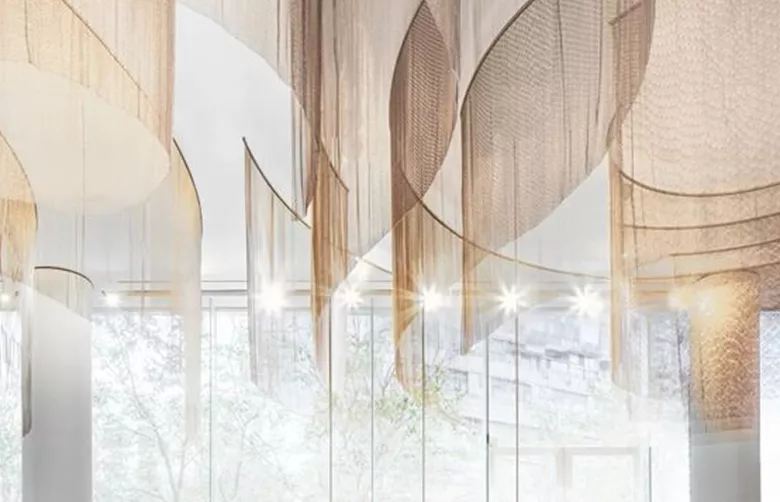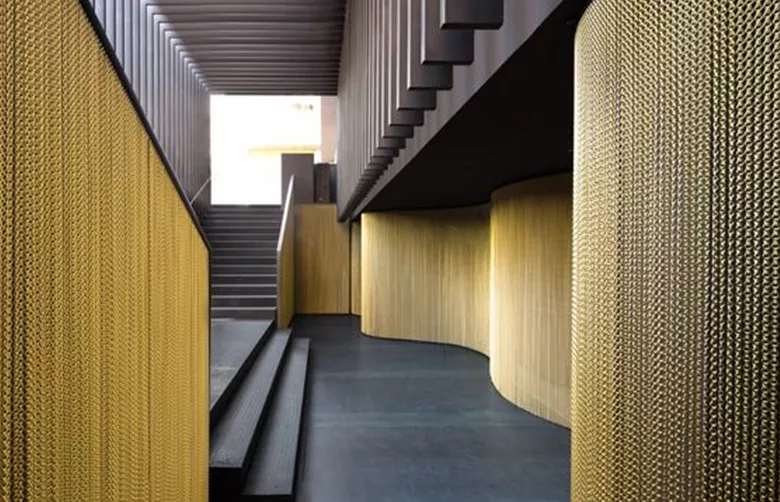

-
About UsProductsCustomized SolutionProjectGalleryNews
News
Woven Metal Fabric: Types, Materials and Applications Guide
Release time: August 24, 2026Woven metal fabric is a specialized architectural material made by interweaving metal wires into different patterns and structures. Combining the visual qualities of textile fabric with the strength and durability of metal, it is increasingly used in architecture, interior design, commercial spaces, and decorative applications.
Depending on the material, weave pattern, wire diameter, and opening, woven metal fabric can create very different visual and functional effects. Fine stainless steel mesh can provide a delicate, textile-like appearance, while heavier woven metal fabric can create a stronger architectural screen.
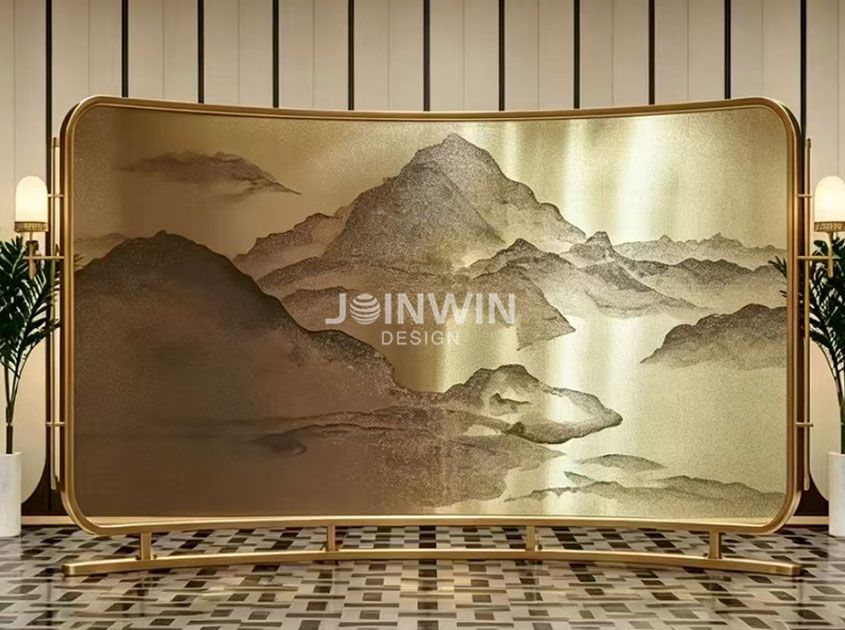
This guide explains the main types, materials, specifications, finishes, and applications of woven metal fabric and provides practical guidance for selecting the right product for a building project.
What Is Woven Metal Fabric?
Woven metal fabric is produced by interlacing metal wires according to a specific weaving pattern.
The basic manufacturing process is similar to textile weaving, but the material is metal wire rather than natural or synthetic fibers.
Common weaving patterns include:
Plain weave
Twill weave
Dutch weave
Decorative weave
Special architectural weave patterns
The final appearance depends on the combination of:
Wire diameter + opening size + weave pattern + material + surface finish
This gives architects and designers considerable freedom when creating decorative metal surfaces.
What Are the Main Types of Woven Metal Fabric?
1. Plain Woven Metal Fabric
Plain weave is one of the simplest and most widely used structures.
Each wire passes alternately over and under the intersecting wire.
Characteristics
Simple appearance
Uniform openings
Good transparency
Stable structure
Versatile design
It can be used for:
Interior partitions
Decorative walls
Elevator interiors
Ceilings
Architectural screens
2. Twill Woven Metal Fabric
In twill weave, the wires pass over and under multiple intersecting wires in a regular pattern.
This creates a distinctive diagonal visual effect.
Advantages
Strong visual texture
Higher flexibility in some configurations
Decorative appearance
Suitable for larger wire diameters
Twill woven metal fabric is often selected when the designer wants more visual depth than a basic plain weave.
3. Dutch Woven Metal Fabric
Dutch weave uses different wire diameters and weave configurations to create a denser structure.
It is traditionally associated with filtration applications, but certain metal weaving structures can also be adapted for specialized architectural applications.
Because architectural projects have different requirements from industrial filtration, the appropriate weave should be selected based on the intended function.
4. Decorative Woven Metal Fabric
Decorative woven metal fabric is designed primarily for visual and architectural applications.
It can feature:
Different wire sizes
Multiple weave directions
Irregular patterns
Mixed materials
Special surface finishes
Applications include:
Feature walls
Hotel interiors
Retail decoration
Ceiling systems
Decorative partitions
5. Heavy-Duty Woven Metal Fabric
Heavy architectural woven mesh uses larger wires and stronger structures.
It can provide:
Greater rigidity
Stronger visual presence
Higher mechanical strength
Applications may include:
Large architectural screens
Facade elements
Stairway infill
Large interior installations
The supporting structure should be designed according to the mesh weight and project loads.
What Materials Are Used for Woven Metal Fabric?
The choice of metal affects appearance, durability, weight, and cost.
Stainless Steel Woven Metal Fabric
Stainless steel is one of the most popular materials for architectural woven mesh.
Common grades include:
304 stainless steel
316 stainless steel
Advantages
High strength
Excellent corrosion resistance
Long service life
Low maintenance
Modern appearance
Applications
Building facades
Interior partitions
Elevator interiors
Stairways
Decorative walls
Commercial buildings
For coastal and highly corrosive environments, 316 stainless steel can be considered.
Aluminum Woven Metal Fabric
Aluminum is a lightweight alternative to stainless steel.
Advantages
Low weight
Good corrosion resistance
Easy handling
Suitable for large decorative areas
It is often considered for:
Ceilings
Interior partitions
Decorative screens
Lightweight facade applications
Aluminum can also be finished in various colors.
Brass Woven Metal Fabric
Brass provides a warm golden or yellow-metal appearance.
It is frequently selected for luxury architectural interiors.
Applications
Hotels
Restaurants
Retail stores
Elevator interiors
Feature walls
Decorative ceilings
Brass woven fabric can create a warmer atmosphere than silver-colored stainless steel.
Copper Woven Metal Fabric
Copper provides a distinctive reddish metallic appearance.
Depending on environmental conditions, its surface can gradually change in appearance.
It can be used for:
Decorative walls
Interior features
Artistic installations
Architectural screens
Copper is especially attractive where the natural character of the metal is part of the design concept.
Bronze Woven Metal Fabric
Bronze-colored woven metal fabric can provide a sophisticated architectural appearance.
It is suitable for:
Luxury interiors
Hotels
Commercial buildings
Feature walls
Decorative partitions
Bronze appearance can be achieved through the selected material or an appropriate surface finish, depending on the product specification.
What Specifications Are Important?
When selecting woven metal fabric, the following specifications should be confirmed.
1. Wire Diameter
Wire diameter affects:
Strength
Weight
Opening
Visual texture
Flexibility
Fine wire produces a lighter, more textile-like appearance.
Thicker wire creates a stronger and more substantial visual effect.
2. Mesh Opening
The opening determines the amount of:
Light transmission
Visibility
Airflow
Visual screening
A larger opening creates a more transparent appearance.
A smaller opening creates a denser visual surface.
3. Mesh Thickness
The overall thickness can influence:
Rigidity
Weight
Appearance
Installation requirements
For large architectural projects, mesh thickness should be considered together with the supporting system.
4. Mesh Width and Length
Woven metal fabric can be supplied in different widths and lengths depending on the production equipment and project requirements.
Large projects should consider:
Panel dimensions
Joint positions
Installation direction
Roll handling
Transportation
Planning these details before production can reduce installation waste.
5. Surface Finish
Surface treatment can dramatically change the appearance of woven metal fabric.
Common finishes include:
Natural metal
Brushed
Polished
Gold
Bronze
Copper
Black
Champagne
The same weave can therefore create completely different architectural styles.
Woven Metal Fabric Applications
1. Building Facades
Woven metal fabric can be installed as a decorative exterior layer.
It can create:
Visual depth
Sun screening
Decorative patterns
A semi-transparent building envelope
Stainless steel and aluminum are common material choices for exterior applications.
For facade projects, the supporting structure and wind conditions must be considered together with the mesh.
2. Interior Partitions
Woven metal fabric can divide interior spaces while maintaining light and visual connectivity.
Applications include:
Offices
Hotels
Restaurants
Shopping centers
Public buildings
Unlike solid walls, metal fabric can provide separation without making the space feel completely enclosed.
3. Elevator Interiors
Fine woven metal fabric can create an elegant metallic surface inside elevators.
Common materials include:
Stainless steel
Brass
Copper
The mesh can be used on:
Wall panels
Decorative inserts
Ceiling elements
Door surrounds
4. Decorative Walls
Woven metal fabric can be used as a feature material for:
Hotel walls
Restaurant interiors
Retail stores
Reception areas
Commercial buildings
Lighting can be used behind or around the mesh to emphasize the weave pattern.
5. Ceiling Decoration
Metal fabric can create a distinctive ceiling texture while maintaining a relatively open structure.
It can be combined with:
LED lighting
Spotlights
HVAC systems
Acoustic materials
The mesh can conceal technical elements while maintaining access and visual openness.
6. Stairways and Balustrades
Woven metal mesh can be used as infill for:
Stair railings
Balustrades
Guardrails
For these applications, the mesh should be selected according to applicable safety requirements, load conditions, opening limitations, and fixing methods.
7. Room Dividers
Woven metal fabric is particularly useful where flexible spatial separation is required.
It can create boundaries between:
Dining areas
Lobby spaces
Reception areas
Office zones
Retail areas
Depending on the installation system, the mesh can be fixed or designed to move along a track.
8. Sun-Shading Systems
A suitably designed woven metal screen can help control:
Solar exposure
Glare
Visual privacy
The actual shading performance depends on:
Mesh opening
Mesh density
Installation angle
Building orientation
Local climate
Architectural modeling may be required for larger facade projects.
9. Retail and Commercial Interiors
Retail designers use woven metal fabric to create:
Display backgrounds
Store partitions
Feature walls
Product showcases
Decorative ceilings
Metallic finishes can complement glass, stone, wood, and lighting.
10. Hospitality Projects
Hotels, restaurants, bars, and entertainment venues can use woven metal fabric to create a premium decorative effect.
Common applications include:
Reception areas
Bar fronts
Restaurant partitions
Feature walls
Elevator interiors
Decorative ceilings
Brass, bronze, copper, and gold-colored finishes are particularly suitable for luxury design concepts.
Woven Metal Fabric vs Architectural Wire Mesh
Although the terms are sometimes used interchangeably, they can refer to somewhat different product categories.
Feature
Woven Metal Fabric
Architectural Wire Mesh
Structure Woven wires Woven/braided metal structures
Appearance Textile-like Broad architectural range
Flexibility Often high Depends on structure
Typical use Interiors, partitions, decoration Facades, walls, ceilings, partitions
Materials Stainless steel, brass, copper, aluminum Stainless steel, aluminum, brass, copper
Design focus Weave and texture Pattern + architectural performance
In practice, the terminology can overlap, so buyers should always confirm the exact weave structure and specifications with the manufacturer.
Woven Metal Fabric vs Metal Chain Curtain
These products serve different design purposes.
Feature
Woven Metal Fabric
Aluminum Chain Curtain
Structure Interwoven wires Interconnected chains
Surface Continuous woven surface Open chain strands
Visual effect Textile-like Flowing/metallic
Movement Depends on installation Very flexible
Best use Walls, facades, ceilings Curtains, partitions, doorways
Choose woven metal fabric when a continuous architectural surface is required.
Choose chain curtain when a lightweight, flowing curtain effect is desired.
How to Choose the Right Woven Metal Fabric?
Step 1: Define the Application
Determine whether the mesh will be used for:
Facade
Ceiling
Wall
Elevator
Partition
Stairway
Decorative installation
Step 2: Select the Material
Stainless steel → strength + corrosion resistance
Aluminum → lightweight
Brass → luxury appearance
Copper → distinctive natural appearance
Step 3: Determine Transparency
Ask:
How much light and visibility should pass through the mesh?
More open weave:
→ More transparency
Denser weave:
→ More screening
Step 4: Choose the Wire Diameter
Fine wire:
→ Lightweight and delicate
Thick wire:
→ Stronger and more substantial
Step 5: Choose the Surface Finish
Select a finish that complements the overall interior or facade design.
Step 6: Confirm the Installation System
Consider:
Frame
Track
Rod
Cable
Tension system
Clamps
Edge reinforcement
Step 7: Request a Sample
Architectural materials should ideally be evaluated physically.
A sample allows the project team to check:
Actual color
Texture
Transparency
Reflectivity
Weave pattern
under the intended lighting conditions.
Recommended Materials by Application
Application
Recommended Materials
Main Consideration
Exterior facade Stainless steel / Aluminum Weather resistance
Elevator Stainless steel / Brass Appearance
Hotel interior Brass / Stainless steel Design
Ceiling Aluminum / Stainless steel Weight
Partition Stainless steel / Brass Transparency
Stairway Stainless steel Strength
Decorative wall Brass / Copper / Stainless steel Finish
Retail interior Aluminum / Brass Appearance
Coastal project 316 stainless steel Corrosion resistance
Common Mistakes When Buying Woven Metal Fabric
1. Choosing Only by Price
Two woven meshes can look similar but have very different:
Wire diameters
Materials
Weave structures
Surface treatments
Weights
Always compare technical specifications.
2. Ignoring Weight
A large architectural installation can involve significant mesh weight.
The supporting system must be designed accordingly.
3. Choosing the Wrong Opening
A mesh that is too open may provide insufficient privacy or shading.
A mesh that is too dense may block too much light.
4. Ignoring Lighting
Metallic mesh can look very different under:
Daylight
Warm LED lighting
Cool LED lighting
Backlighting
Always check samples under representative lighting.
5. Ignoring the Installation System
The final appearance depends on more than the mesh itself.
The complete system includes:
Mesh + Edge Treatment + Support + Fixings
Why Choose Joinwin design Woven Metal Fabric?
Joinwin design supplies woven metal fabric and architectural wire mesh for architects, interior designers, contractors, distributors, and building projects.
Available materials include:
Stainless steel
Aluminum
Brass
Copper
Products can be customized according to:
Weave pattern
Wire diameter
Mesh opening
Width
Length
Surface finish
Color
Edge treatment
Typical applications include:
Building facades
Interior partitions
Decorative walls
Elevator interiors
Ceilings
Stairways
Hotels
Restaurants
Retail stores
Commercial buildings
For project applications, samples can be provided to help designers evaluate the actual mesh texture, transparency, color, and finish before production.
Frequently Asked Questions
What is woven metal fabric?
Woven metal fabric is a flexible or semi-flexible architectural material produced by interweaving metal wires into different patterns. It combines the visual characteristics of textile fabric with the durability of metal.
What is the best material for woven metal fabric?
Stainless steel is a versatile choice for durability and corrosion resistance. Aluminum is useful for lightweight applications, while brass and copper are popular for decorative and luxury interiors.
Can woven metal fabric be used outdoors?
Yes. Stainless steel and appropriately finished aluminum woven mesh can be used for exterior architectural applications. Material selection should consider the local climate and corrosion conditions.
Can woven metal fabric be used as a room divider?
Yes. It can provide visual separation while maintaining airflow and light transmission.
Is woven metal fabric flexible?
Many woven metal fabrics have a degree of flexibility, but the exact flexibility depends on the wire diameter, weave pattern, mesh dimensions, and material.
Can woven metal fabric be customized?
Yes. Manufacturers can customize the material, weave pattern, wire diameter, opening, dimensions, surface finish, and color according to project requirements.
Conclusion
Woven metal fabric combines the texture of textile fabric with the strength, durability, and visual character of metal, making it a versatile material for modern architecture and interior design.
The most important selection factors are:
Application → Weave Type → Material → Wire Diameter → Opening → Transparency → Finish → Installation
Stainless steel is a strong choice for demanding architectural applications, aluminum can reduce weight, while brass and copper provide distinctive decorative finishes.
For building facades, elevator interiors, ceilings, partitions, stairways, decorative walls, hotels, restaurants, and retail spaces, the right woven metal fabric can become both a functional building element and a major part of the architectural design.
Joinwin design provides customized woven metal fabric and architectural wire mesh for international building and interior projects, with different materials, weave patterns, dimensions, and finishes available.
Recommended News