
-
About UsProductsCustomized SolutionProjectGalleryNews
News
Stainless Steel Woven Metal Fabric for Interior and Exterior Design
Release time: September 18, 2026Stainless steel woven metal fabric offers architects and designers a combination of metallic appearance, flexibility, transparency and durability that is difficult to achieve with conventional solid materials.
Made by weaving stainless steel wires into different patterns, woven metal fabric can be used as a decorative surface, spatial divider, facade screen, ceiling feature, railing infill or architectural enclosure.
Its appearance can range from fine and delicate to bold and highly structured, depending on the wire diameter, mesh opening and weave pattern.
Because stainless steel can be used in both indoor and outdoor environments, stainless steel woven metal fabric has become a versatile material for commercial buildings, hotels, retail spaces, transportation facilities and contemporary architectural projects.
This guide explains how stainless steel woven metal fabric can be used in interior and exterior design, what specifications matter and how to select the right mesh for an architectural project.

1. What Is Stainless Steel Woven Metal Fabric?
Stainless steel woven metal fabric is a flexible metal mesh produced by interweaving stainless steel wires according to a specific weave pattern.
Depending on the design, the wires may form:
Square openings
Rectangular openings
Twill patterns
Decorative patterns
Dense screening structures
Open architectural textures
The mesh can be manufactured in different widths, lengths, wire diameters and opening sizes.
Common stainless steel grades used for architectural mesh include 304 and 316, although the appropriate grade depends on the environment and project specification.
Unlike rigid metal sheets, woven mesh has an open structure and can provide varying levels of:
Transparency
Airflow
Light transmission
Visual screening
Flexibility
This makes it particularly useful when a designer wants to create a boundary without creating a completely solid surface.
2. Why Use Stainless Steel for Architectural Mesh?
Stainless steel has several characteristics that make it attractive for architectural applications.
Metallic Appearance
The natural surface of stainless steel provides a clean and contemporary appearance.
Corrosion Resistance
Stainless steel has a passive chromium-rich surface layer that provides corrosion resistance. Different stainless grades have different levels of resistance, so material selection should match the environment.
Durability
Stainless steel mesh can be used in applications where the material is exposed to regular handling or environmental conditions.
Design Flexibility
Different wire diameters, mesh openings and weave patterns allow designers to create many visual effects.
Transparency
Unlike solid metal panels, woven mesh can maintain varying levels of visibility through the material.
Compatibility With Other Materials
Stainless steel mesh can be combined with:
Glass
Concrete
Wood
Stone
Aluminum
Steel
Lighting systems
3. Stainless Steel Woven Mesh for Exterior Architecture
Exterior applications are one of the most important areas for stainless steel woven metal fabric.
The mesh can be installed as an architectural layer in front of a building or used as a functional screen.
Common exterior applications include:
Building facades
Sun screens
Balcony screens
Entrance features
Parking structures
Exterior partitions
Walkway screens
Security or protective enclosures
Decorative facade panels
The open structure creates a different visual effect from solid cladding.
During daylight, the mesh can appear as a metallic surface. Depending on the mesh density and viewing angle, the building behind it may remain partially visible.
4. Stainless Steel Mesh as a Facade Screen
A woven stainless steel mesh facade can be installed as a secondary layer in front of the main building envelope.
This creates a layered architectural effect.
For example:
Exterior → stainless steel mesh → air space → glass facade
The distance between the mesh and the underlying surface can create shadows and visual depth.
Architects can use different mesh densities to adjust the relationship between the mesh and the building behind it.
A relatively open mesh may emphasize transparency.
A denser mesh can create stronger visual screening.
The appropriate choice depends on the architectural concept and technical requirements of the project.
5. Stainless Steel Mesh for Sun Screening
Stainless steel woven mesh can also be used as an external screening layer around windows and glazed facades.
The mesh may reduce direct visual exposure and modify sunlight reaching the building envelope.
Its actual solar-control performance depends on factors including:
Mesh open area
Wire diameter
Installation angle
Building orientation
Distance from glazing
Local solar conditions
Seasonal sunlight
Therefore, architectural mesh should not be specified as a universal solar-control solution without evaluating the complete facade design.
For projects where energy performance is important, the mesh specification should be reviewed together with the architect and facade engineer.
6. Stainless Steel Woven Metal Fabric for Building Entrances
Building entrances provide an opportunity to use stainless steel mesh as a strong visual feature.
Possible applications include:
Entrance screens
Canopies
Lobby exteriors
Decorative walls
Covered walkways
Entrance partitions
A metallic woven surface can create a sophisticated appearance while allowing light and air to move through the structure.
Mesh can also be curved or arranged in different configurations depending on the product and supporting system.
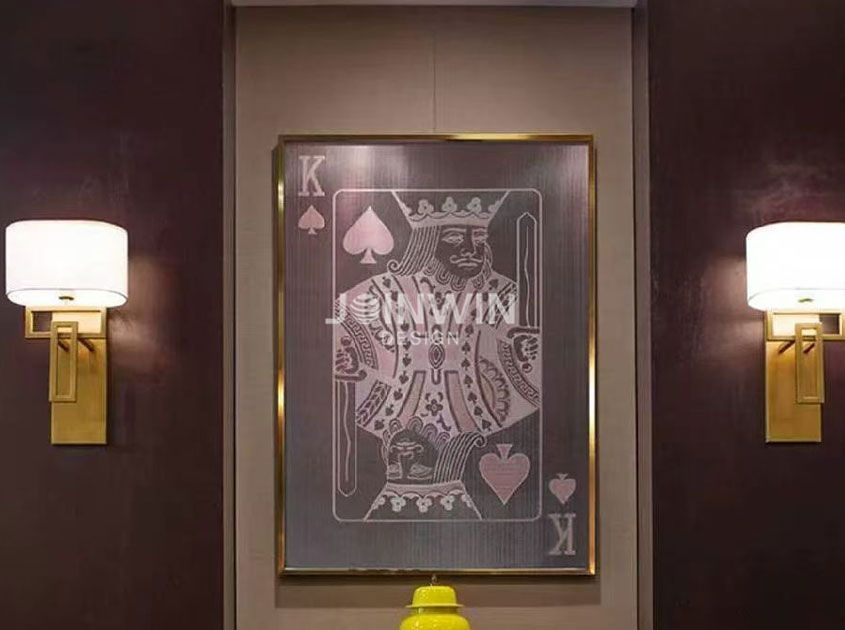
7. Stainless Steel Mesh for Interior Partitions
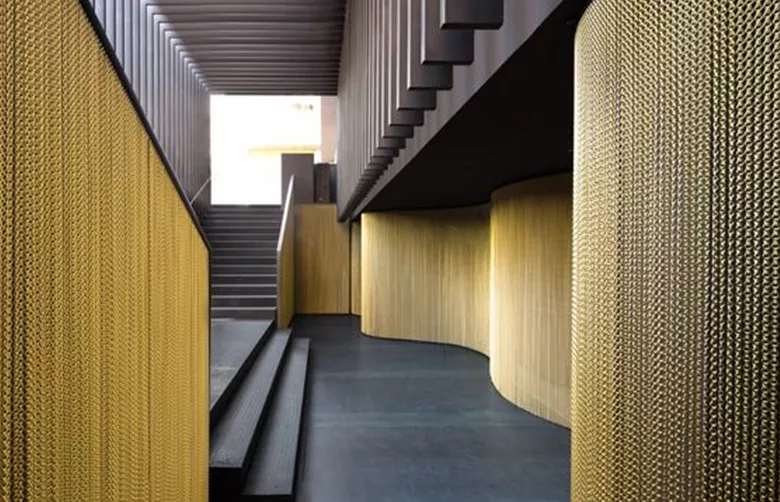
Inside a building, stainless steel woven mesh can function as a room divider.
Unlike a solid partition, mesh can separate spaces while preserving some visual connection.
Applications include:
Hotel lobbies
Restaurants
Offices
Retail stores
Exhibition spaces
Reception areas
Public buildings
The designer can choose a denser or more open mesh depending on the desired level of visual separation.
A stainless steel mesh partition can also be suspended from a ceiling track, installed inside a frame or fixed between structural supports.
8. Stainless Steel Mesh for Hotel Interiors
Hotels often use decorative materials to create distinctive environments.
Stainless steel woven mesh can be incorporated into:
Reception areas
Lobby partitions
Restaurant interiors
Bar areas
Feature walls
Staircases
Ceiling elements
Elevator lobbies
The metallic surface works particularly well with carefully designed lighting.
Spotlights and indirect lighting can highlight the texture of the woven structure and create changing reflections as people move through the space.
9. Stainless Steel Woven Mesh for Restaurant Design
Restaurants can use metal mesh as both decoration and spatial separation.
Potential applications include:
Kitchen screens
Dining-area partitions
Bar backgrounds
Entrance curtains
Decorative wall panels
Ceiling features
An open mesh can separate areas without creating the visual weight of a solid wall.
This can be particularly useful in modern restaurants where designers want different functional zones to remain visually connected.
10. Stainless Steel Mesh in Retail Interiors
Retail environments often require flexible ways to divide display areas.
Stainless steel woven mesh can be used for:
Storefront decoration
Product display backgrounds
Room dividers
Fitting-room screens
Decorative ceilings
Feature walls
Display structures
The material can create a distinctive metallic texture while maintaining visibility.
Different mesh patterns can also support different brand styles, from minimalist to industrial and highly decorative.
11. Stainless Steel Mesh for Ceilings
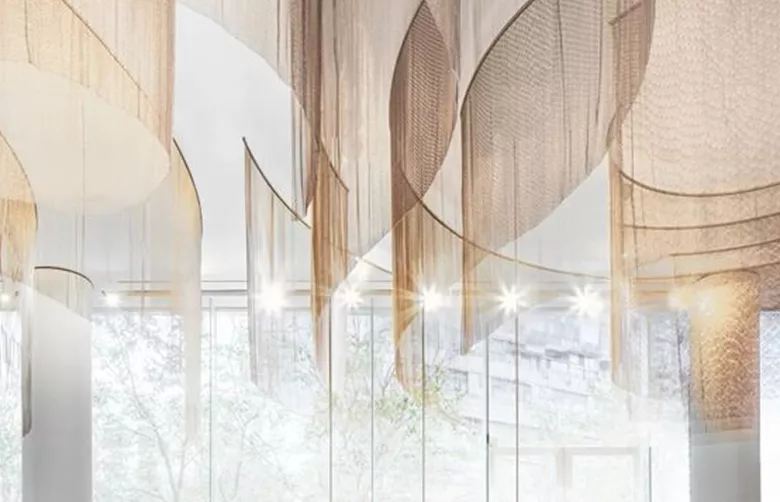
Woven metal fabric can be suspended horizontally to create decorative ceiling structures.
Possible applications include:
Hotel ceilings
Restaurant ceilings
Shopping centers
Retail stores
Office reception areas
Airport interiors
Exhibition spaces
A mesh ceiling can create visual depth while leaving space above the mesh for:
Lighting
Ventilation
Sprinklers
Electrical services
Maintenance access
The mesh weight and suspension system need to be considered during design.
12. Stainless Steel Mesh for Staircases and Balustrades
Architectural stainless steel mesh can also be used in stair and railing designs.
Possible applications include:
Staircase infill
Balustrade panels
Mezzanine barriers
Walkway screens
Decorative railings
The mesh needs to be properly supported and fixed to the structure.
For safety-related applications, the complete system must meet the relevant local building codes and project requirements. The suitability of a particular mesh should be verified for the intended application rather than assumed from its appearance.
13. Stainless Steel Mesh for Balcony and Privacy Screens
Balconies and terraces can benefit from semi-transparent screening.
A woven stainless steel mesh can provide:
Partial privacy
Visual separation
Airflow
Metallic decoration
A contemporary appearance
The degree of privacy depends on mesh density, viewing distance, lighting and viewing angle.
For exterior applications, the stainless steel grade and fixing system should be selected according to the local environment.
14. Stainless Steel Mesh and Lighting Design
Lighting can dramatically change the appearance of woven metal fabric.
The mesh can be illuminated from:
Behind
Above
Below
The side
Within the surrounding structure
As light interacts with the wire pattern, the mesh can create shadows, reflections and layered visual effects.
This makes stainless steel mesh particularly interesting for:
Hotel lobbies
Restaurants
Retail stores
Exhibition areas
Feature walls
Entrance structures
Designers should evaluate the actual mesh sample under representative lighting whenever possible.
15. 304 vs 316 Stainless Steel Architectural Mesh
304 and 316 are two commonly considered stainless steel grades.
The primary distinction is that 316 contains molybdenum, which generally provides better resistance to chloride-related corrosion than 304.
304 Stainless Steel
304 can be considered for many:
Interior applications
Commercial interiors
General architectural projects
Indoor partitions
Decorative walls
General exterior environments
316 Stainless Steel
316 may be considered where greater resistance to chloride exposure is important, such as certain:
Coastal projects
Marine environments
Outdoor architectural installations
High-humidity applications
316 is not automatically necessary for every architectural mesh project.
Material selection should consider the actual environment rather than choosing the highest-grade material by default.
16. Mesh Opening and Transparency
The appearance of stainless steel woven mesh is strongly influenced by its open area.
A more open mesh generally provides:
Greater transparency
More airflow
A lighter visual effect
A denser mesh can provide:
Stronger visual screening
More substantial appearance
Greater surface coverage
Architects should therefore consider the desired visual relationship between the mesh and the space behind it.
A mesh sample is often the easiest way to evaluate this relationship.
17. Wire Diameter and Mesh Weight
Wire diameter affects both appearance and physical characteristics.
Thicker wire can create a stronger visual texture and increase mesh weight.
Thinner wire can create a finer appearance and may provide a lighter visual effect.
For architectural projects, the designer should consider:
Wire diameter
Mesh opening
Mesh weight per square meter
Panel dimensions
Supporting structure
Installation method
The supporting system must be designed around the actual mesh specification.
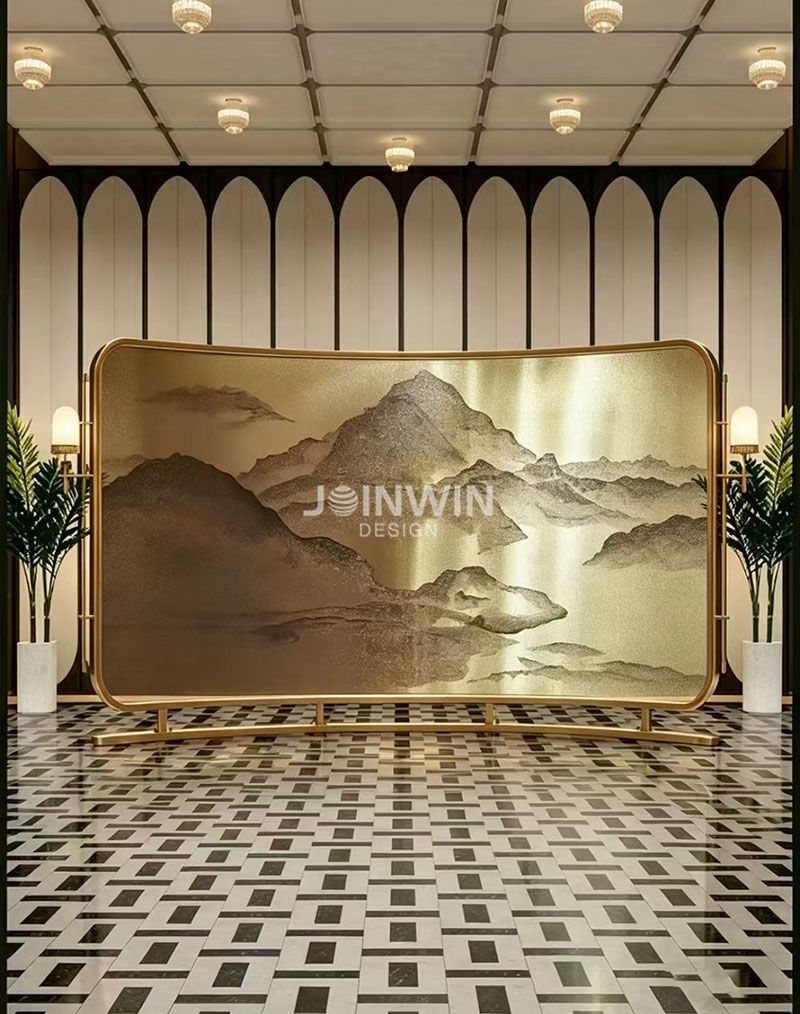
18. Woven Patterns for Architectural Design
Different weave structures can create very different appearances.
Common options include:
Plain weave
Twill weave
Dutch weave
Decorative woven patterns
Custom architectural patterns
Some patterns emphasize transparency, while others create a denser and more textured surface.
For decorative architectural projects, pattern selection should be based on both appearance and technical requirements.
19. Surface Finish Options
Stainless steel mesh can be supplied with different surface appearances.
Depending on the product, options may include:
Natural stainless steel
Bright finish
Brushed finish
Polished finish
Colored coating
Custom decorative treatment
The finish can dramatically change how the mesh interacts with light.
A polished surface may create stronger reflections, while a brushed finish can produce a more restrained appearance.
For large architectural projects, finish samples should be approved before mass production.
20. Stainless Steel Woven Mesh vs Solid Metal Panels
Architects sometimes need to decide between woven mesh and solid metal panels.
Feature
Stainless Steel Woven Mesh
Solid Metal Panel
Structure Open woven wires Continuous sheet
Transparency Variable Usually very low
Airflow High Low when solid
Visual weight Generally lighter More substantial
Flexibility Available in flexible forms Usually rigid
Texture Woven pattern Sheet surface
Screening Partial Higher
Decorative possibilities Weave-based Pattern, perforation, finish
The choice depends on the design objectives.
Woven mesh is particularly useful when transparency and airflow are part of the design concept.
21. Installation Systems for Stainless Steel Mesh
The mesh itself is only one component of an architectural installation.
Possible fixing systems include:
Frames
Cables
Rods
Tracks
Tension systems
Clamps
Hooks
Custom structural supports
Different applications require different installation methods.
A facade may require a dedicated supporting structure.
A ceiling may use suspension cables or a framed system.
An interior partition may use a track or top rail.
The fixing system should therefore be discussed with the mesh manufacturer before production.
22. How to Specify Stainless Steel Woven Metal Fabric
For an architectural project, a useful specification may include:
Material: Stainless Steel
Grade: 304 / 316
Mesh Type: Woven Architectural Mesh
Weave Pattern: ___
Wire Diameter: ___ mm
Mesh Opening: ___ mm
Mesh Width: ___ mm
Panel Length: ___ mm
Surface Finish: ___
Color: ___
Application: Facade / Ceiling / Interior
Installation: Frame / Cable / Track / Custom
Quantity: ___ m²For large facade projects, drawings showing panel dimensions and fixing locations can help the manufacturer prepare the correct production and packaging plan.
23. Quality Control for Architectural Stainless Steel Mesh
Architectural mesh is often installed across large visible surfaces, so consistency is important.
Quality checks may include:
Wire diameter
Mesh opening
Mesh width
Weave consistency
Panel dimensions
Surface finish
Color consistency
Edge treatment
Flatness where applicable
Packaging condition
For projects with large quantities, approving a sample before mass production can help prevent differences between the expected and actual appearance.
24. Packaging and Export Transportation
Architectural mesh needs careful packaging because the finished surface can be visible in the completed building.
Depending on the product, manufacturers may use:
Protective paper
Plastic wrapping
Protective film
Pallets
Wooden cases
Customized export packaging
Large mesh panels should be packed to reduce the risk of deformation or surface damage during transportation.
For international projects, labeling can also help contractors identify the correct mesh sections during installation.
25. How to Choose Stainless Steel Woven Mesh for Interior or Exterior Design
Start with the application.
For Exterior Facades
Consider:
Stainless steel grade
Environmental exposure
Open area
Mesh weight
Wind and structural requirements
Fixing system
Maintenance access
For Interior Partitions
Consider:
Appearance
Transparency
Privacy
Mesh density
Finish
Track or frame system
For Ceilings
Consider:
Mesh weight
Suspension system
Lighting
HVAC coordination
Maintenance access
For Decorative Walls
Consider:
Weave pattern
Surface finish
Lighting
Color
Panel dimensions
This application-first approach is usually more effective than choosing a mesh pattern first and trying to find a use for it afterward.
26. Frequently Asked Questions
What is stainless steel woven metal fabric used for?
It is used for building facades, sun screens, interior partitions, ceilings, staircases, balustrades, balconies, retail interiors, hotel interiors, restaurant spaces and decorative architectural features.
Is stainless steel mesh suitable for exterior architecture?
Yes. Stainless steel woven mesh can be used outdoors when the material grade, finish, supporting structure and fixing system are appropriate for the environment and project requirements.
What is the difference between 304 and 316 architectural mesh?
316 stainless steel contains molybdenum and generally provides better resistance to chloride-related corrosion than 304. The appropriate grade depends on the environment.
Can stainless steel woven mesh be used as a ceiling?
Yes. It can be suspended as a decorative ceiling layer. The mesh weight, suspension system, lighting and building services need to be coordinated.
Can stainless steel mesh provide privacy?
It can provide partial visual screening. Privacy depends on mesh density, viewing angle, lighting and the distance between the mesh and the observer.
Can stainless steel woven mesh be customized?
Yes. Manufacturers can often customize material grade, weave pattern, wire diameter, mesh opening, dimensions, finish and installation components.
How should architectural stainless steel mesh be specified?
Specify the stainless steel grade, weave pattern, wire diameter, mesh opening, dimensions, finish, application and installation system. For large projects, drawings and physical samples are also useful.
Conclusion
Stainless steel woven metal fabric provides architects with a combination of metallic texture, transparency, flexibility and functional screening.
For exterior architecture, it can become a facade layer, entrance screen, balcony screen or sun-screening element. For interiors, it can be used for partitions, ceilings, staircases, hotel spaces, restaurants, retail stores and decorative walls.
The final architectural effect depends on much more than the mesh material itself.
Stainless steel grade + weave pattern + wire diameter + mesh opening + finish + density + fixing system
all influence the appearance and performance of the finished installation.
For architects, designers, contractors and distributors, the best way to select stainless steel woven metal fabric is to begin with the intended application and then determine the required technical and visual specifications.
For large projects, physical samples are especially valuable. They allow the design team to evaluate transparency, mesh density, metallic reflection, color and lighting effects before committing to full-scale production.
When sourcing stainless steel woven metal fabric from a manufacturer, it is also important to confirm not only the mesh specification but the complete installation system, packaging and quality-control process.
The result is not simply a piece of metal mesh. It is an architectural surface that can help shape how a building looks, feels and interacts with light and space.
Recommended News