
-
About UsProductsCustomized SolutionProjectGalleryNews
News
Metal Fabric Mesh for High-End Architectural Projects
Release time: May 26, 2026In today’s modern architecture industry, designers and developers are increasingly searching for materials that combine aesthetics, functionality, durability, and sustainability. Among the most innovative decorative building materials, metal fabric mesh has become one of the preferred solutions for high-end architectural projects worldwide.
From luxury hotels and commercial complexes to airports, museums, shopping malls, and landmark buildings, metal fabric mesh is widely used to create sophisticated architectural effects while improving building performance. Its flexibility, transparency, and modern metallic appearance allow architects to achieve creative and visually impressive designs that traditional materials cannot provide.
This article explores the advantages, applications, materials, and customization possibilities of metal fabric mesh for high-end architectural projects.
What Is Metal Fabric Mesh?
Metal fabric mesh is a type of architectural decorative mesh manufactured from metal wires, rods, or cables woven together into flexible fabric-like structures. Unlike ordinary industrial wire mesh, architectural metal fabric mesh focuses on:
Decorative appearance
Modern architectural aesthetics
Structural flexibility
Functional performance
It combines the softness and movement of textile fabrics with the durability and strength of metal materials.
Metal fabric mesh is commonly produced from:
Stainless steel
Aluminum
Brass
Copper
Bronze
Alloy metals
Why High-End Architectural Projects Use Metal Fabric Mesh
Luxury architectural projects require materials that provide both visual impact and long-term performance. Metal fabric mesh has become increasingly popular because it offers unique advantages compared with traditional cladding and decorative materials.
Main Advantages:
Elegant modern appearance
Excellent light and airflow control
Flexible installation possibilities
Long service life
Sustainable architectural performance
High customization capability
These characteristics make metal fabric mesh ideal for premium commercial and public architecture.
Common Applications of Metal Fabric Mesh
1. Building Facade Cladding
Architectural facades are one of the most important applications for metal fabric mesh.
Benefits:
Dynamic building appearance
Solar shading performance
Improved ventilation
Reduced energy consumption
Modern metallic aesthetics
The semi-transparent structure creates impressive visual depth while supporting sustainable building design.
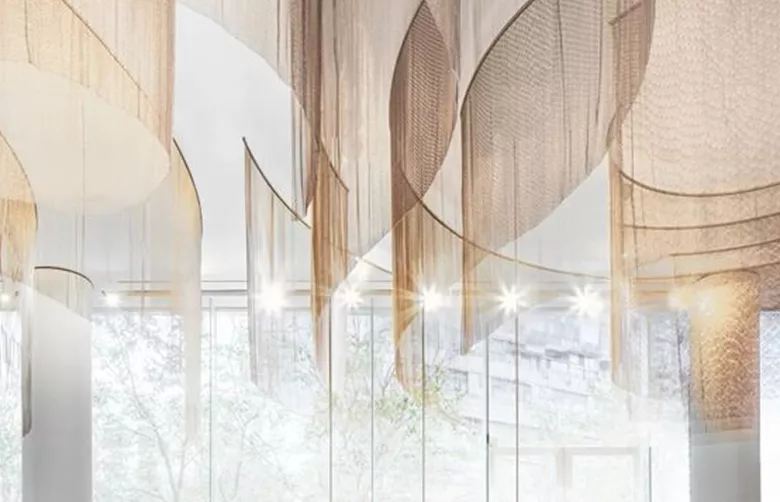
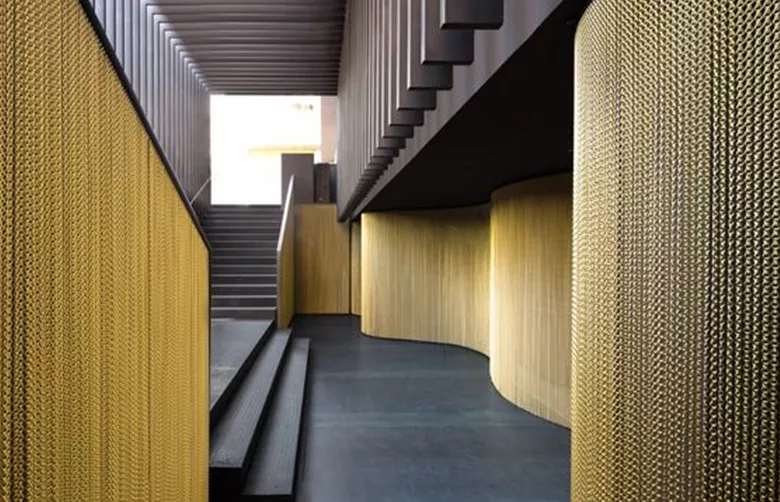
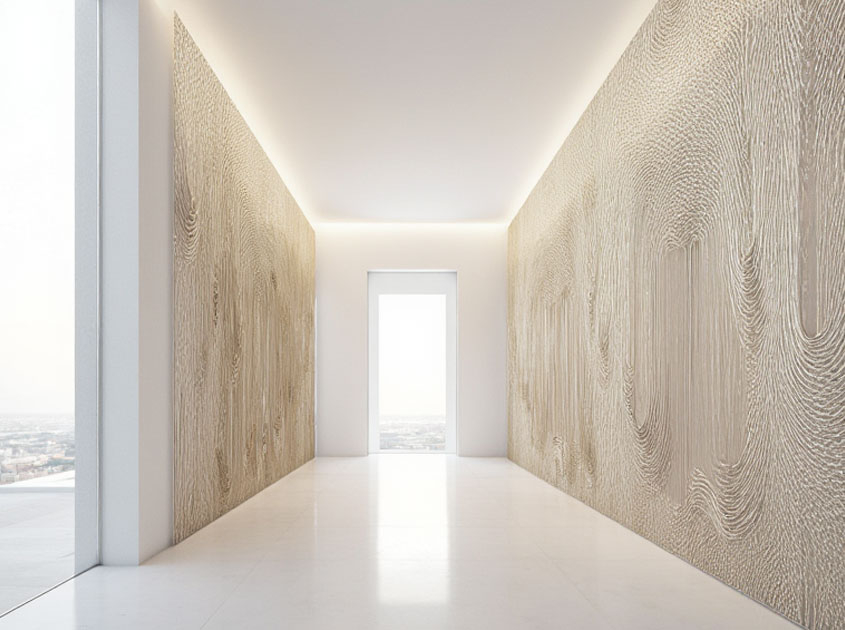
2. Luxury Interior Decoration
Metal fabric mesh is widely used in:
Hotel lobbies
Luxury restaurants
Shopping malls
Office interiors
Exhibition halls
Applications include:
Decorative walls
Feature ceilings
Room dividers
Elevator decorations
Its metallic texture creates elegant and contemporary interior environments.
3. Ceiling Systems
Decorative mesh ceilings are increasingly popular in modern architecture.
Advantages:
Conceal HVAC systems
Integrate lighting systems
Maintain open spatial feeling
Improve ventilation performance
Metal mesh ceilings are commonly seen in airports, commercial centers, and luxury retail spaces.
4. Balustrades and Safety Systems
Metal fabric mesh is also used for:
Stair railings
Balcony barriers
Escalator protection
Pedestrian safety systems
Benefits:
High strength
Modern appearance
Visibility retention
Lightweight structure
5. Sun Shading Systems
Architectural mesh can function as an exterior shading solution.
Benefits:
Reduce solar heat gain
Improve indoor comfort
Lower cooling energy costs
Enhance facade design
This supports energy-efficient and sustainable architecture.
6. Creative Space Division
Metal fabric mesh is ideal for:
Open-space offices
Luxury retail stores
Art galleries
Hospitality environments
It creates visual separation while maintaining openness and airflow.
Best Materials for High-End Metal Fabric Mesh
Stainless Steel Mesh
The most widely used material for architectural projects.
Advantages:
Excellent corrosion resistance
Modern appearance
High strength
Long service life
Easy maintenance
Stainless steel 304 and 316 are especially popular in premium architecture.
Aluminum Mesh
Ideal for lightweight architectural structures.
Advantages:
Lightweight
Good weather resistance
Flexible installation
Cost-effective for large projects
Brass and Copper Mesh
Used in luxury decorative architecture.
Advantages:
Warm metallic tones
Elegant decorative effect
Premium visual appearance
Often chosen for boutique hotels and landmark interiors.
Types of Metal Fabric Mesh
Woven Architectural Mesh
Produced by weaving metal wires and rods into decorative patterns.
Features:
Elegant texture
Flexible transparency
Premium architectural style
Cable Mesh Systems
Manufactured from stainless steel cables and rods.
Features:
Strong structural performance
Large-span applications
Modern facade systems
Metal Coil Drapery
Flexible decorative metal curtain system.
Features:
Dynamic movement
Soft metallic appearance
Ideal for ceilings and partitions
Advantages of Metal Fabric Mesh in High-End Projects
Luxury Architectural Appearance
Metal fabric mesh creates:
Sophisticated visual effects
Contemporary architectural identity
Premium commercial atmosphere
Sustainable Building Performance
Architectural mesh contributes to:
Natural ventilation
Daylight optimization
Reduced energy consumption
Supporting green building standards.
Flexible Customization
Architects can customize:
Wire diameter
Opening size
Weaving patterns
Colors and finishes
Panel dimensions
This enables unique architectural creativity.
Long-Term Durability
Metal fabric mesh is:
Corrosion resistant
Fire resistant
Weather resistant
Suitable for long-term outdoor use
How to Choose the Right Metal Fabric Mesh
Consider Architectural Style
Luxury commercial buildings → brass or stainless steel mesh
Minimalist architecture → silver woven mesh
Industrial-modern design → expanded metal style
Consider Transparency Requirements
Open mesh:
Better airflow and visibility
Dense mesh:
Greater shading and privacy
Consider Installation Environment
Exterior applications require:
Strong corrosion resistance
Structural strength
UV resistance
Interior decoration focuses more on aesthetics and lighting effects.
Why Global Architects Choose Chinese Manufacturers
China is one of the world’s leading suppliers of architectural metal fabric mesh because of:
Advanced weaving technology
Strong customization capability
Large-scale manufacturing capacity
Competitive pricing
Extensive export experience
Chinese manufacturers provide architectural mesh systems for:
Airports
Hotels
Commercial buildings
Shopping malls
Public infrastructure projects worldwide
What Professional Suppliers Can Provide
Reliable manufacturers offer:
Design and Engineering Support
CAD drawings
Structural recommendations
Installation guidance
Quality Control
Surface finish inspection
Tensile strength testing
Dimensional accuracy control
Export Services
Secure packaging
International logistics coordination
Technical documentation support
Future Trends in Architectural Metal Mesh
Modern architecture is increasingly moving toward:
Sustainable building materials
Smart facade systems
Lightweight structures
Metallic minimalist aesthetics
Open-space architectural concepts
Metal fabric mesh fits perfectly into these future design trends.
Conclusion
Metal fabric mesh for high-end architectural projects combines beauty, durability, flexibility, and modern engineering performance. Whether used for facades, ceilings, partitions, railings, or luxury interiors, architectural mesh helps create visually striking and highly functional buildings.
Its customizable designs, premium materials, and sustainable performance make metal fabric mesh one of the most important materials in contemporary architecture worldwide.
As a professional Chinese architectural metal mesh manufacturer and exporter, providing customized metal fabric mesh solutions with advanced production technology and global project experience helps architects, designers, and developers create elegant, innovative, and high-performance architectural projects worldwide.
Recommended News