
-
About UsProductsCustomized SolutionProjectGalleryNews
News
How to Select Architectural Woven Metal Fabric: Materials, Mesh Types & Specification Guide
Release time: September 20, 2026Architectural woven metal fabric is increasingly used in modern buildings for facades, ceilings, partitions, balustrades, room dividers, entrance features and decorative screens. Unlike conventional solid metal panels, woven metal fabric combines metal strength with visual transparency, airflow and flexible design possibilities.
However, choosing the right architectural woven metal fabric is not simply a matter of selecting a pattern or color. The material, wire diameter, mesh opening, weave structure, weight, finish and installation method all affect the final appearance and performance.
For architects, designers, contractors and distributors, understanding these specifications makes it easier to select a mesh that matches both the design concept and the actual project requirements.
What Is Architectural Woven Metal Fabric?
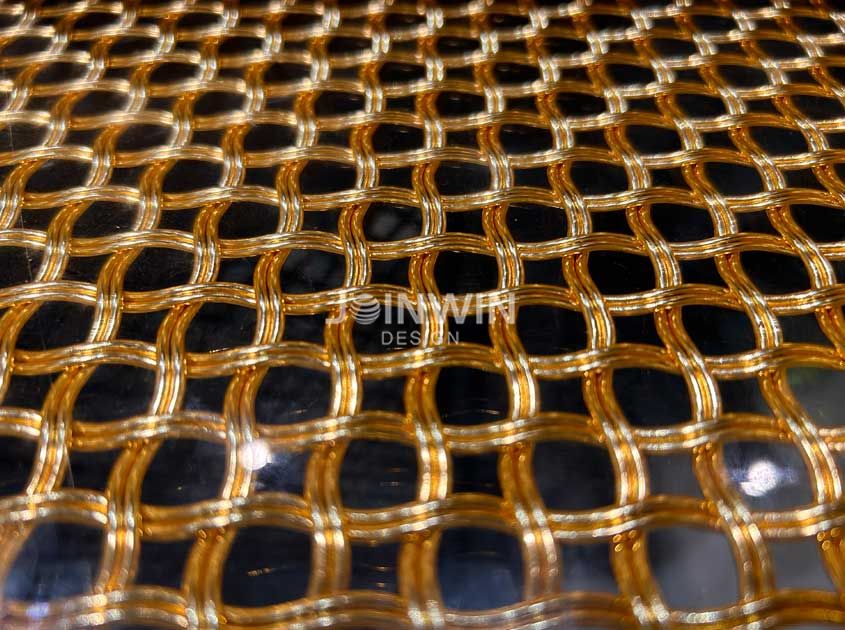
Architectural woven metal fabric is produced by weaving metal wires together to create a flexible mesh structure. Depending on the design, the wires can be woven in different patterns to create different levels of transparency, texture and visual density.
Common materials include:
Stainless steel
Aluminum
Brass
Copper
Mild steel
Other metal alloys for specialized projects
Compared with ordinary wire mesh used for industrial screening or fencing, architectural woven metal fabric places much greater emphasis on appearance, transparency, texture, surface finish and installation design.
It can be supplied as rolls, panels or customized sections depending on the project.
1. Start With the Application
The first step is to identify where the woven metal fabric will be installed.
Different applications require different mesh characteristics.
Application
Important Considerations
Building facade Weather exposure, weight, transparency, fixing system
Interior partition Appearance, flexibility, privacy, light transmission
Ceiling Weight, suspension system, visual effect
Room divider Mesh density, flexibility, appearance
Staircase or balustrade Opening size, fixing, safety requirements
Retail display Decorative effect, lighting, color
Hotel interior Design, durability, cleaning
Solar screen Open area, sun exposure, orientation
Entrance feature Appearance, movement, installation
For example, a lightweight aluminum mesh may be suitable for a decorative interior partition, while a stainless steel mesh may be more appropriate for an exterior facade where environmental exposure is an important consideration.
2. Choose the Right Metal Material
Material selection is one of the most important decisions.
Stainless Steel Woven Metal Fabric
Stainless steel is widely used for architectural applications because of its combination of durability, appearance and corrosion resistance.
Common grades include 304 and 316 stainless steel.
304 is often considered for general architectural applications, while 316 can be selected where greater resistance to chloride-containing environments is required, such as certain coastal or marine environments.
Typical applications include:
Exterior facades
Interior partitions
Hotel interiors
Commercial buildings
Staircases
Balustrades
Decorative screens
Aluminum Woven Metal Fabric
Aluminum is valued for its relatively low weight and decorative possibilities.
It can be particularly useful when designers want a lightweight metal appearance or when the supporting structure has weight limitations.
Aluminum mesh can also be supplied in different surface finishes and colors.
Typical applications include:
Interior decoration
Ceilings
Decorative partitions
Retail interiors
Lightweight screens
Feature walls
Brass and Copper
Brass and copper can create a warmer and more distinctive architectural appearance.
They are often selected when the visual character of the material is more important than achieving a neutral metallic appearance.
They can work well in:
Hotels
Restaurants
Luxury retail
Feature walls
Interior decorative installations
For outdoor projects, however, designers should consider how the material and surface will change under environmental exposure.
3. Select the Right Weave Type
The weave structure directly affects the appearance and physical characteristics of the mesh.
Common architectural woven mesh structures include:
Plain woven mesh
Twill woven mesh
Decorative woven patterns
Spiral or cable-based constructions
Heavy architectural woven mesh
Flexible decorative mesh
Different structures can produce very different visual effects even when the same metal is used.
A relatively open weave can create a lightweight and transparent appearance, while a dense weave can provide greater visual coverage and a stronger decorative effect.
When choosing a weave, consider:
How much of the background should remain visible?
How much light should pass through?
Should the mesh look visually light or dense?
Does the mesh need to remain flexible or form a relatively rigid surface?
These questions are often more useful than choosing a mesh based only on its product name.
4. Consider Mesh Opening and Transparency
Mesh opening is one of the most important visual specifications.
A larger opening generally creates greater transparency and airflow, while a smaller opening creates a denser visual surface.
For example:
Large opening → more transparency and airflow
Medium opening → balance between visibility and screening
Small opening → denser appearance and greater visual coverage
For architectural projects, the actual appearance can also depend on viewing distance and lighting.
A mesh that looks relatively open when viewed from close range may appear much denser when installed across a large facade.
Therefore, architects and buyers should request physical samples whenever possible.
5. Pay Attention to Wire Diameter
Wire diameter affects more than strength.
It can influence:
Mesh weight
Visual texture
Rigidity
Transparency
Surface appearance
Material consumption
Project cost
Thicker wire generally produces a more substantial visual appearance, while thinner wire can create a lighter and more delicate effect.
For large architectural projects, wire diameter should be considered together with the mesh opening rather than evaluated independently.
For example:
Wire diameter + mesh opening + weave structure = overall visual character
This is why two products with similar mesh openings can look completely different after installation.
6. Check the Mesh Weight
Architectural woven metal fabric is often installed on walls, ceilings, facades or suspended structures.
Therefore, weight is an important engineering and installation consideration.
Mesh weight can depend on:
Metal material
Wire diameter
Mesh opening
Weave type
Mesh dimensions
A heavy stainless steel mesh may require a different supporting structure from a lightweight aluminum mesh.
For ceiling applications, the suspension system should be designed according to the actual mesh weight and project requirements.
For facade applications, the supporting structure and fixing system should also be considered during the design stage.
Do not select the mesh first and think about installation afterward.
7. Choose the Surface Finish and Color
Architectural woven metal fabric can have a very different appearance depending on its surface finish.
Possible finishes include:
Natural metallic finish
Polished finish
Brushed finish
Satin finish
Anodized aluminum
Powder coating
Other decorative finishes
Color can also significantly change the architectural effect.
For example, a dark finish can visually reduce the prominence of the mesh and emphasize the building behind it, while gold or bronze finishes can make the mesh itself become a decorative feature.
When specifying a finish, buyers should confirm:
Base metal
Surface treatment
Color reference
Sample approval
Finish consistency
Intended indoor or outdoor use
For large projects, approving a physical sample before mass production is particularly important.
8. Decide How Much Privacy You Need
Architectural woven metal fabric does not provide the same type of privacy as a solid wall.
Instead, it provides different levels of visual screening.
The final privacy effect depends on:
Mesh opening
Wire diameter
Weave structure
Viewing angle
Lighting conditions
Distance between the observer and mesh
Lighting behind or in front of the mesh
A dense mesh can partially screen a space while still allowing light and airflow to pass through.
This makes woven metal fabric useful for:
Hotel room dividers
Restaurant partitions
Retail displays
Lobby screens
Office partitions
Exterior privacy screens
If complete visual privacy is required, a solid panel or another screening material may be more appropriate.
9. Consider Indoor vs Outdoor Installation
The environment should influence material selection.
For Interior Projects
Typical priorities include:
Appearance
Color
Texture
Lighting effect
Cleaning
Weight
Installation method
Aluminum, stainless steel, brass and other decorative metals can all be considered depending on the design.
For Exterior Projects
Additional factors become important:
Rain and humidity
Coastal exposure
UV exposure
Pollution
Temperature changes
Wind loading
Drainage
Fixing system
Maintenance access
For exterior applications, material selection should be based on the actual environmental conditions rather than simply choosing the most expensive material.
10. Think About the Installation System Early
Architectural woven metal fabric is only one part of the complete system.
The final installation may include:
Top and bottom tracks
Rods
Cables
Frames
Hooks
Clamps
Tensioning components
Stainless steel accessories
Custom support structures
For a room divider, the mesh may be suspended from a ceiling track.
For a facade, the mesh may be fixed to a structural frame using a dedicated connection system.
For a staircase, the mesh may need to be tensioned between structural members.
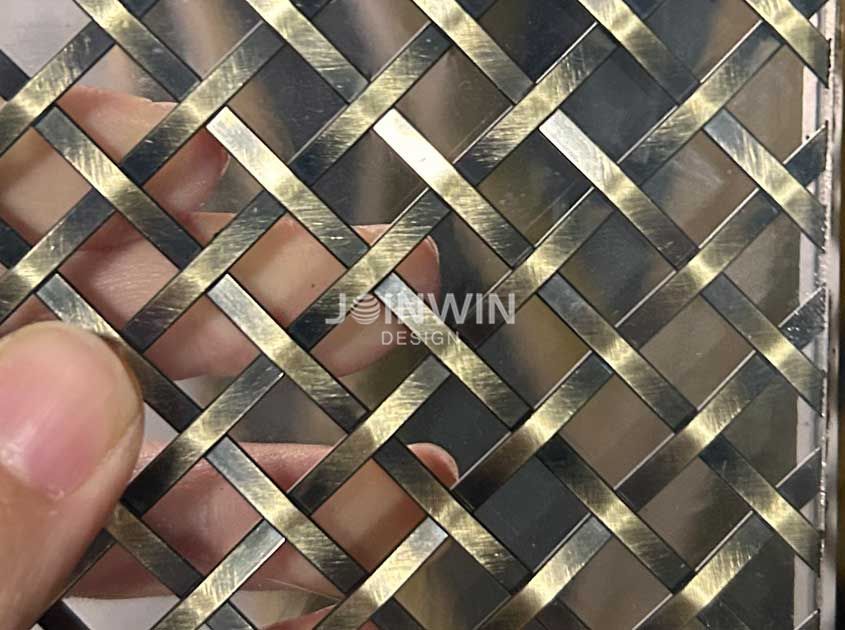
The fixing method can significantly influence the final appearance.
A beautiful mesh can look very different if the supporting structure is poorly designed or visually inconsistent with the architecture.
11. Choose the Right Mesh Format
Architectural woven metal fabric can be supplied in different formats.
Rolls
Rolls can be convenient for:
Long partitions
Large continuous areas
Flexible installations
Projects requiring customized cutting
Panels
Panels may be more suitable when:
Precise dimensions are required
The mesh is installed inside frames
The project uses modular sections
Handling large rolls is inconvenient
The supplier should confirm maximum production dimensions, tolerances, joining methods and packaging before placing a large order.
12. Request Samples Before Ordering
A specification sheet cannot completely show how architectural mesh will look in a real building.
The appearance can change significantly under different:
Lighting conditions
Viewing distances
Background colors
Installation angles
Frame systems
Surface finishes
For this reason, architects and contractors should request samples before approving mass production.
A useful sample approval process is:
Material → weave → mesh opening → finish → color → installation method → final approval
For major projects, it can also be useful to evaluate a larger sample rather than relying on a very small piece.
13. Compare Suppliers by More Than Price
Architectural mesh is a customized product, so the lowest quoted price does not necessarily mean the lowest overall project cost.
When comparing suppliers, check:
Product Specifications
Material grade
Wire diameter
Mesh opening
Weave type
Mesh weight
Dimensions
Surface finish
Manufacturing Capability
Weaving equipment
Custom pattern capability
Finishing capability
Quality inspection
Production consistency
Project Support
Sample development
Shop drawings or specification support
Installation recommendations
Custom dimensions
Packaging
Export experience
For distributors and contractors, consistent production is especially important because replacement or additional batches should visually match the original order as closely as practical.
14. Example of an Architectural Mesh Specification
A project inquiry can be much easier to quote when the buyer provides clear specifications.
For example:
Product: Architectural woven metal fabric
Material: Stainless steel 304
Weave: Decorative woven pattern
Wire diameter: 1.0 mm
Mesh opening: Customized
Finish: Natural stainless steel
Panel size: Customized
Application: Interior partition
Quantity: 500 m²
Accessories: Ceiling track and fixing components
Destination: Project location / portThe exact specifications should be adjusted according to the architectural design and engineering requirements.
15. Common Mistakes When Choosing Architectural Woven Metal Fabric
Mistake 1: Choosing Only by Appearance
A mesh may look attractive in a sample but may not be suitable for the actual environment.
Mistake 2: Ignoring Weight
Heavy mesh can affect the supporting structure, especially for ceilings and large suspended installations.
Mistake 3: Selecting the Material Without Considering the Environment
Indoor and outdoor projects may require different material and finish considerations.
Mistake 4: Comparing Prices Without Comparing Specifications
Two suppliers may quote different materials, wire diameters, opening sizes or finishes.
A lower price may simply represent a different product.
Mistake 5: Forgetting the Installation System
The mesh and its supporting components should be considered as one system.
Mistake 6: Approving Mass Production Without a Sample
Color, weave structure and transparency should ideally be approved before production.
Architectural Woven Metal Fabric Selection Checklist
Before placing an order, confirm the following:
Application
Indoor or outdoor installation
Metal material
Material grade
Weave type
Mesh opening
Wire diameter
Mesh weight
Surface finish
Color
Transparency requirement
Privacy requirement
Roll or panel format
Dimensions
Supporting structure
Fixing accessories
Sample approval
Packaging requirements
Quantity and delivery requirements
FAQ
What material is commonly used for architectural woven metal fabric?
Stainless steel and aluminum are widely considered for architectural applications. Brass, copper and other metals can also be selected for specific decorative requirements.
Is stainless steel mesh suitable for building facades?
Yes. Stainless steel woven metal fabric can be used for facade screens and other exterior architectural applications, provided the material, finish, fixing system and structural requirements are appropriate for the project environment.
How do I choose the mesh opening?
Start with the required transparency, privacy and visual effect. Larger openings generally provide more visibility and airflow, while smaller openings create a denser screen.
Is architectural woven metal fabric suitable for ceilings?
Yes. It can be used for suspended ceilings and decorative ceiling features. The mesh weight and suspension system should be considered during design.
Can architectural woven metal fabric be customized?
Yes. Depending on the supplier's manufacturing capability, customization can include material, weave pattern, wire diameter, opening, dimensions, finish, color and installation accessories.
Should I choose 304 or 316 stainless steel?
The choice depends on the project environment and requirements. 304 is commonly considered for general architectural applications, while 316 may be considered where greater resistance to chloride exposure is required.
Can woven metal fabric be used as a room divider?
Yes. Its combination of visual separation, airflow and decorative appearance makes it suitable for hotel, restaurant, office, retail and residential interior applications.
Conclusion
Choosing the right architectural woven metal fabric requires more than selecting an attractive pattern. The best specification depends on how the mesh will be used, where it will be installed and what visual and technical requirements the project has.
The key factors are:
Material + weave + mesh opening + wire diameter + weight + finish + installation system
For interior projects, appearance, transparency, color and flexibility may be the main considerations. For exterior projects, material selection, environmental exposure, structural support and fixing details become increasingly important.
For architects, contractors, distributors and project buyers, a detailed specification and physical sample can greatly reduce misunderstandings before mass production.
If you are sourcing architectural woven metal fabric from China, provide the application, material, approximate dimensions, mesh appearance and required quantity. A professional manufacturer can then recommend suitable mesh structures, finishes and installation solutions for your project.
Recommended News